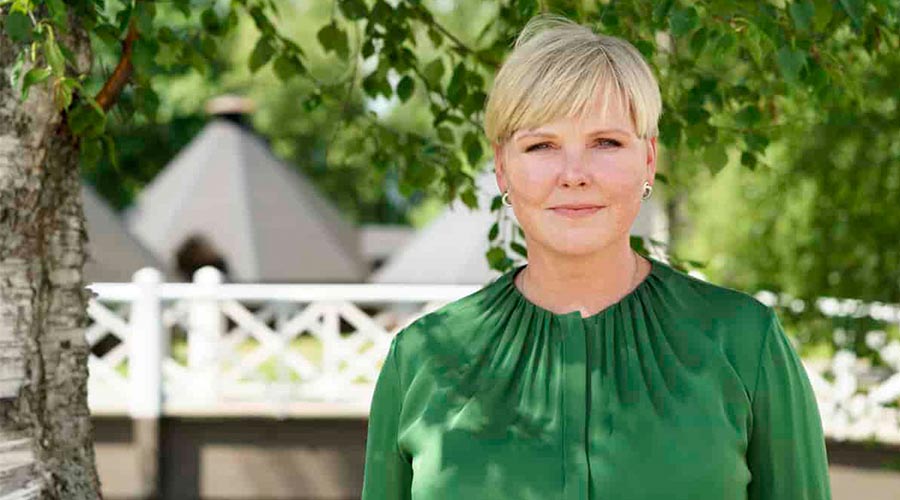
07 Oct Interview with Anne Beathe Tvinnereim, Minister of International Development, Norway
Anne Beathe Tvinnereim, Minister of International Development, Norway, talks about lessons the country has learned in combating challenges laid down by the COVID-19 pandemic and the region’s contributions in advancing the UN’s Sustainable Development Goals in nations around the world.
How can lessons learned by Nordic countries during the COVID-19 crisis impact change on the global stage?
Our track record in handling the pandemic in Nordic countries has been relatively good due to a stable starting point. The Nordic welfare model is our best and most effective development program. Nordic nations rank high on quantity and quality of development aid. A high degree of public trust, transparency and inclusion are some of the norms we value profoundly. We need to see how we can apply the lessons learned here to treat international issues. My Nordic colleagues in international development agree that there is a strong potential for increased Nordic cooperation in an international and cross-sectoral forum. We are fortunate to have a wonderfully integrated region, and we have an ambition of being a world leader in change, competitiveness and sustainability. This shared vision is defined by the Nordic Ministerial Council. While challenges raised by the pandemic were challenging, we are in an advantageous position due to the lessons we learned. We have had strong discussions in Nordic countries on how we can improve safety measures, including border closings, so things can be done in a more effective manner the next time something like this happens. We have touched on how we can be more resilient in terms of producing and sharing inputs on medical equipment, vaccines and similar elements in a Nordic context.
How is the Norwegian government helping global economies reach the UN’s Sustainable Development Goals (SDGs)?
We must face the fact that we have ongoing crises. We have essentially a perfect storm with the global health crisis and the food security crisis, which will be much worse in 2022 than in 2021. We also have an economic and social inequality crisis. We know that energy and food prices are soaring. This is setting the world back and we need to step up our efforts to address these issues. From a Norwegian point of view, we guarantee that our financing for development will be directed exclusively towards reaching our 2030 goals. We need to step up because we still have not figured out how to build the bridge between working with humanitarian crises and long-term aid. The new Norwegian government will unquestionably scale up its efforts with our international partners. The state has promised to maintain an elevated level of 1 percent of our gross national income directed towards international efforts to reach the UN’s SDGs. We all need to help each other break down the silos in international cooperation for developments as demanded by the SDGs. We need to better integrate the work against climate change and the work for social development. Although we still have a long way to go in reaching across sectors and getting the private sector more on board, there are many good things happening in terms of businesses around the world stepping up. I am optimistic.
What innovative advances in digital systems has Norway brought to the global arena?
There is a need for innovation and digitalization in the field of international development. One way Norway is doing its part is as co-lead for the Digital Public Goods Alliance. We have provided many exciting digital solutions that are in use all over the world. For example, our health information system developed at the University of Oslo in partnership with developing countries is now in use in over 100 countries. We created a COVID-19 tracker that was put in place quite early in the pandemic and is now being used in over 30 countries. We also support what is called the digital identity, which is developed in India. Access to an identity is hugely important for human development. If you do not have an identity, you do not have access to public services and a wealth of other opportunities. Approximately one billion people do not currently have an identity. This basic innovation can make a big difference. There are many basic institutions that we all take for granted in the developed part of the world. We do not realize how important they are to enable a country to get on its feet. Another example is the creation of Statistics Norway, our national data agency. They developed a business registry that is being shared as a digital public good. Additionally, we have developed some interesting solutions in the agricultural sector to give small-scale farmers a heightened position in the market with better access to value chains, prices and more.
How are Nordic countries and Norway contributing to the fight against climate change?
Climate and the environment are priority areas for the Nordic Council of Ministers’ action plan for 2021 to 2024. Norway will assume the chair of this ministerial platform in 2022. We have a long tradition in Nordic countries of working together on climate change; all countries share the aim of becoming carbon neutral. We are also significant contributors in climate financing. At COP26 In Glasgow, the Norwegian government presented its new pledge to double its climate financing from $795 million to $1.59 billion by 2026. Within this commitment, we are increasing the share destined for financial climate adaptation. The pledge is extremely important in terms of international development. In our national discussions on climate, we tend to focus a lot on finance for mitigation. We must also focus on adaptation, which is extremely important. We want to strengthen our collaboration and escalate the work on climate adaptation.
While we are a big producer of fossil fuels, a priority for the Norwegian government is to use our political and financial muscles to facilitate the green transition. Future green technologies must be built on the shoulders of the capacity and industries we already have. We agreed to align financial flows with the Paris Agreement targets, which is extremely encouraging. This has received a good response. Norway’s Government Pension Fund Global is the world’s largest sovereign wealth fund, and we invest worldwide. The government’s goal is to make this the leading fund in responsible investments, including the management of climate risk. When the world’s largest sovereign wealth fund takes upon that scale of ambition, it really makes a huge difference. Climate risk is a financial risk, and we need to manage it as such. As a responsible investor, our pension fund will base its ownership work on an overall long-term goal of net-zero emissions from companies we invest in. This will have a massive impact on markets. Norway’s public pension funds is quite possibly Norway’s biggest contribution to the green transition and reaching the UN’s SDGs. We also recently announced a new climate investment fund, which will accelerate funding of renewable energies in developing countries.
No Comments