
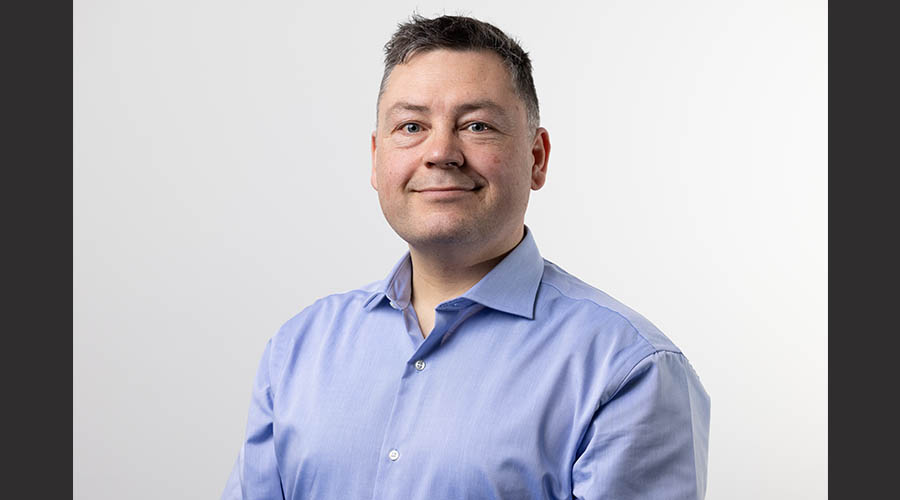
07 Oct Interview with Pele Broberg, Minister for Foreign Affairs, Business, Trade and Climate, Greenland
Pele Broberg, Minister for Foreign Affairs, Business, Trade and Climate, Greenland, talks about the nation’s unique qualities and its current drive to diversify its economy and attract foreign direct investment.
How would you describe Greenland and its citizens to potential tourists?
The Arctic where Greenland is located is world famous despite its inaccessibility. Everybody has heard about Greenland in some respect or another. However, most do not know about the intricacies that characterize Greenland and all the things we have to offer, not just in terms of tourism or investment. Greenland comprises 20% of the Arctic and is the world’s largest island. We are composed of approximately 70 towns and villages that seem like islands themselves since we do not have roads between settlements, villages and cities. Getting to Greenland is not difficult but traveling around the island is an enormous task. Distances between towns are not quite relatable to people used to going from London to Brussels by train, for example. In Greenland one must fly or sail. Our country is gigantic and harsh compared to other nations.
On the other hand, Greenland is a place of diversity. In summer it is warm, and in the winter it may be freezing with clear skies and crisp air. It is beautiful no matter the season. If you want to try dog sledding or winter-related experiences, it is best to visit from March to May. If you want to try the Arctic summer experiences when you can see whales and enjoy hikes, it is best to come from June to September. The high season is primarily July to September; these three months are the most popular months. However, we are trying to flatten out the curve and expand our lower seasons.
We also have a diverse population. Our main population is indigenous Inuit people, but we also have Danes, Faroese and many other nationalities. We live very differently from settlement to settlement. When you visit Greenland, you will find one commonality amongst its people: we are very welcoming. This is because of our natural isolation from the rest of the world. When we get visitors, it is always a pleasure.
What impacts did the COVID-19 pandemic have on Greenland’s economy and citizens?
One of Greenland’s main strengths is that we are an island. The second we felt our population might be in danger of the COVID-19 pandemic we closed our borders. Due to our location, when we closed our borders for passenger flights the next step was to not have any passenger ships. We decided to only have cruise ships, which was an easy decision due the effect the pandemic had on cruise tourism. We made sure we had a steady stream of supplies for daily life and kept exporting during this time. Our factories, production lines and fishermen did not stop working. We have a very structured income based on seafood exports. We found we could adapt to the situation by replacing our tourists with our own people traveling and vacationing in Greenland. We had a few periods where we had to implement a mask mandate, but generally we have had little restrictions. One can go out to eat and take a stroll to the shops without a mask. We have had a very free society despite the pandemic. We had almost no cases in Greenland.
In a municipality in North Greenland, we actually saw income and tax revenue increase during the COVID-19 period where we did not have any tourists. While one might say it is not a good idea to lose tourism, we gained something by learning to spend our vacations in our own country. When we do so money circulates in our economy a lot longer than if we directly spend it outside the country. Currently we primarily spend our money and vacations in Denmark. However, our tourism sector is hurting. We must make sure we do not sacrifice the entire industry.
What steps is Greenland taking to diversify its lead sectors?
For the last couple of decades, we have tried to open our economy. However, we still have a lack of strategies in place. We are used to having Denmark provide our primary investment income. We do not have any foreign direct investments coming from outside of Denmark on a large scale. We are looking into how we can make sure that outside influence will not negatively affect our companies and businesses. We must have some protection of our rights as indigenous people. However, we must also build a framework wherein foreign companies and foreign direct investment from the U.S. happens in the long term. We must look at our different sectors. For example, we purchase everything from Denmark, including American lumber. We do not purchase any lumber directly from Canada or the U.S. and almost all our houses are built of lumber.
We are looking to establish a free trade agreement with other countries such as the United States. This will take time, but the ambition is there. We need interest from American companies that want to sell their goods in Greenland. In the digital sector, providers such as Netflix, iTunes and Hulu are not accessible because we are classified as part of Europe even though we are not in the European Union or the European continent. We need to clear this up while making Greenland more attractive for American companies by promoting our market. We want to increase both export and import with the U.S.
You recently met with U.S. Secretary of State Antony Blinken. How would you describe the relationship between Greenland and the United States?
One key element that was reflected on was the invigoration of trust between our countries. The last time we were independent was during the second world war when Denmark did not control us. We were independent and cooperated with the United States; it was the last time we had a U.S. consulate here. The fact that we have renewed and invigorated interest from the United States — including reopening the consulate — gives a sense that somebody believes in us and that we can be friends with other nations without necessarily going through Denmark.
One of the things that we talked about was tourism and the bilateral relations with regards to trade and the mining industry. We also talked about our common worldview. We are glad we can still trade with China like Denmark and America. We all agree that our relations with other countries, including China and Russia, are complicated. However, we are happy there is no requirement from our allies to behave in a certain way; they are not forcing us to do anything. They are here to help and give advice; if we want to follow the advice or not is entirely up to us.
What is Greenland doing to acquire more trade relationships with international markets?
Greenland has wanted to be part of the global community for a long time but has been unable to put into words or actions how to achieve this. We want to have trade agreements with different countries and unions. We have a trade agreement with the European Union but that is because we are an overseas country and territory. We do not have a trade agreement with the United States or Canada even though we are basically part of North America. We do not even have a trade agreement with Iceland, one of our closest friends and neighbors.
In the past we have lacked the political ambition or understanding of how to achieve this. My personal goal is to have countries that are friendly to Greenland help us get these deals. Greenland is not a big economy, and we would not threaten other economies by opening our own. On the contrary, we will undoubtedly contribute to our allies’ economic development. The block grant given from Denmark is around €500 million a year, which is nothing to big corporations operating around the world. We do not need much to develop, but it is necessary to have bilateral relationships with more countries.
Additionally, trade agreements are of no use if we do not know how to utilize them in our country and others. We need to make sure that we empower Greenlanders. Since the beginning of colonialism, we have experienced other people coming to Greenland, running their businesses and reaping all the profits; the Inuit have largely been left out of taking part in gains. These experiences are difficult to forget. We need to make sure that everyone understands that this is a beneficial thing, which is difficult. We want to empower indigenous people. We want investors to not make the same mistake that most people have throughout time who came to Greenland for short-term profit only. If Greenlanders do not feel that it is a beneficial relationship, it will be a short-lived experience for all of us. We want people coming to Greenland to build a beneficial and trustful relationship with Greenlanders.
What is Greenland doing to combat climate change?
As an undeveloped nation we have been outside the Paris Agreement, but we are making small steps to join the accord as Greenland, not as part of Denmark. Industrialized countries such as Denmark and the rest of Europe have their own full-fledged production lines up and running. Despite the fact we are still a developing economy, we are more than willing to look at how we can help combat climate change in the Arctic. We strongly feel the effects of climate change. Hunters in the north who need to provide for their families occasionally lack ice to hunt on. There is sometimes no snow in certain areas where we are used to drive dog sleds to hunt for food. Animals are moving their traditional habitats and routes because of climate change. In the south, fish are changing locations and we need to change the way we fish. One can visibly see the retracting glaciers.
Climate change is not something we can solve; we all play a role in its reality. One of the things we noticed during the pandemic along with the sharp decline in air travel and production, was the corresponding decline of pollution in certain areas. Greenland is looking at ways to increase our power-to-x potentials through partnerships to help us get necessary funding and technology. We have massive amounts of hydro power potential available. However, as one of the least dense populations in the world, we lack funding and knowhow. The will exists, but not the financial muscle. We will soon break news on our own initiatives to help combat climate change.
Sorry, the comment form is closed at this time.