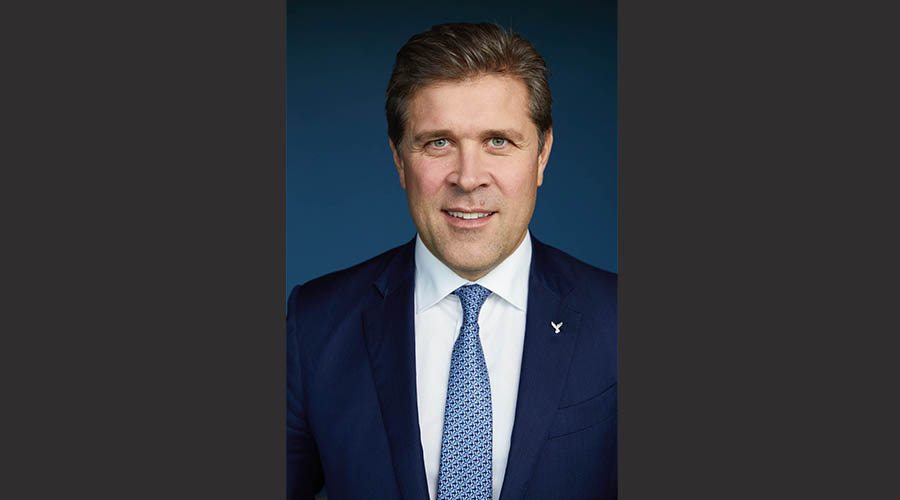
07 Oct Interview with Bjarni Benediktsson, Minister of Finance and Economic Affairs, Iceland
Bjarni Benediktsson, Iceland’s Minister of Finance and Economic Affairs, outlines the steps the government has taken to mitigate the economic effects of the COVID-19 pandemic and the importance of cooperation between countries in dealing with pressing international issues
How has Iceland diversified its industrial sectors?
We have diversified away from the fishing industry that was traditionally the single pillar of the economy for the first half of the 20th century. That said, our fisheries continue to create a lot of value. Energy intensive industries and tourism are being grown as second and third economic pillars. Start-ups focused on research and development is a top area of focus in Iceland. Since 2014, we have been steadily increasing funding and we see a lot of activity in this area. There is now a much wider spectrum than only engineering or software programming, including biomedical products. Exciting times are arising in the country.
What is Iceland doing to regrow its tourism sector?
The reactivation of the tourism sector poses a huge challenge. We are applying a strategy to assist related companies through the most difficult periods. We have mitigated the effects of laying off workers and delays in payments for public taxes this year. We have minimized operating costs of the entire sector. We are giving loan guarantees for those that have longer-term viability. We have put money aside to be used when the pandemic is over to launch a campaign to attract tourism. We are past the procurement stage and have begun cooperating with specialists and advertising agencies while we wait. Iceland has a competitive advantage over many others after the pandemic. It will be more attractive to come to an exclusive place like Iceland where you have clean air, fresh water and vastness of space. You can stand in the middle of nowhere and see the glaciers. You can watch the rivers run and the lava form. It is completely different from travelling to big cities in the U.S. or Europe.
The capacity of Iceland’s tourism sector is significant; we can accommodate 2 million tourists again without building new hotels or similar infrastructure. People, roads, hotels, sector knowledge and the airport are all here. Restaurants and other services are in place. We are ready to welcome everyone when the skies open again. If the slowdown continues and there is no tourism in 2021, we will see even more bankruptcies and more difficulties. My belief is that we will bounce back quickly. However, this is not all reliant on what we are doing ourselves, it is reliant on the willingness of tourists to travel again and for travel connections to be put in place.
Why did Iceland recover so quickly from the 2008 financial crisis?
Our recovery from the 2008 debt crisis began with the large decision to not nationalize the private debt of our financial institutions. While some banks stated they were too big to fail, our banks were in fact too big to save; it was not realistic. Additionally, we are a prime example of benefits you receive from having your own currency. We increased competitiveness overnight by the appreciation of our currency. We also applied capital controls, which initially were only intended to last for six months but lasted more than eight years. Having your own currency at times of economic difficulties can be critical. On the other hand, capital controls can work tremendously well to protect the economy, households and businesses and give shelter for necessary adjustments.
Due to financial difficulties caused by the 2008 banking sector collapse, we entered an economic program with the International Monetary Fund. This included tax measures and adjustment on our expenditures; we needed to apply 53 austere measures. We put down a set of fiscal rules two years ago that have been the foundation for our public finances. We built a lot of buffers in our system. Our large currency reserves are probably ten times higher than they were during the financial crisis 10 years ago. Consequently, we can give oxygen to the private sector. The household debt challenge that was the main issue in 2008 is no longer there thanks to these buffers.
What measures did Iceland implement to support the economy and citizens during the current financial crisis?
Even though we came out stronger from the last financial crisis, it was clear we needed a different approach to the affected economy during the pandemic. We initially started with a macro examination of what was happening and made decisions based on statements announced by prominent institutions in the world, including the International Monetary Fund. We decided to analyse offers we had in our system and picked up ratios that were most favourable for the Icelandic treasury. We used the fiscal space that had previously been created to reduce the economic cost of the pandemic based on the assumption that this was a temporary situation.
One measure we came up with was an unemployment scheme for companies that guaranteed them the possibility to temporarily lay off people while keeping the employer-employee relationship intact. While other countries had similar initiatives, our measure made sure employees retained most of their salaries. We have a very long unemployment benefits program that can last up to two and a half years with benefits for the first three months related to previous income. We extended this period from three to six months.
Another program we extended related to government guarantees in applying for the launch of corporations. We created a package for larger firms and another for smaller firms. We also offered to take part in the severance pay for companies whose income fell dramatically. We made sure we assisted companies who lost more than 90% of their income to comply with severance pay obligations. In this way, companies that adjusted their costs down to zero could continue functioning until they got back on track. Although the entire situation was approached rapidly, we were aware we needed long-term thinking. The biggest challenge is private investment; we need to address the fact that corporations are no longer investing. To tackle this problem, we will introduce tax incentives for companies to invest and make sure they benefit from investing in at least the next two years rather than later. Tax incentives will help investors keep more gains.
How has Iceland grown foreign direct investment into the country and how significant is the U.S. in this context?
In the past, Iceland had very little foreign direct investments unless we did bilateral investment agreements. This was the case for the first smelters, as they only came in for big investment agreements and received exemptions from many domestic rules relating to taxes and other important issues. Now, we are attracting foreign direct investment from other countries, specifically the U.S. It is a good example of our growing strength. It is related in part to the extensive connections we have made in recent years through our airport and extensive flight connections to the U.S. In 2018, we had around half a million guests from the U.S., which had a spillover effect. Many people went back to their homes and took with them ideas from their experience in Iceland. Additionally, we have had more stability in recent years, which will continue to create more opportunities. We have things that the world is currently looking for, such as clean water and sustainable energy production. Our image is that of a clean and healthy nation. While we plan to continue to develop our business relationship with the U.S., this can be difficult for a scarcely populated nation such as ours. They have decided that talks with countries in the European Union go through a single channel, which impedes direct communication. It can be challenging to get the attention necessary to conclude a new foreign trade agreement with the U.S.
What is the importance of Nordic cooperation and what major partnerships are key in solidifying the region?
In Iceland’s 2019 presidency of the Nordic Council, we focused mostly on youth, gender equality and sustainable tourism. We also have a strong focus on the oceans, an area all Nordic nations rely on. Without a doubt, climate change is one of our largest focus areas as climate change will occur in the north faster than other places.
The European Free Trade Association is a key organization for us. It has allowed us to create foundations and negotiate agreements with over 70 countries and territories through bilateral talks. The most significant arrangement with the European Free Trade Association is the European Economic Area agreement between relevant states and the EU. This agreement gives us access to the EU’s internal market. Although it is a big challenge to apply all the relevant rules and implement them into domestic law, we place great importance on being an active member.
Our participation in the Nordic Council has increased in importance because we have seen a growing tendency towards isolationism in many other countries. There is a strong push against this in all the northern region; we believe that Nordic corporation is a good model. The pandemic has highlighted the importance of good international relations and the need to counter isolationist political stances. Cooperation between countries is key to solving big issues. Everyone will be affected if we are unsuccessful in leading growth again. We cannot withdraw and just prepare for the worst to come. We ought to believe and create the best out of the situation we are in; it is in our hands to do that.
Sorry, the comment form is closed at this time.