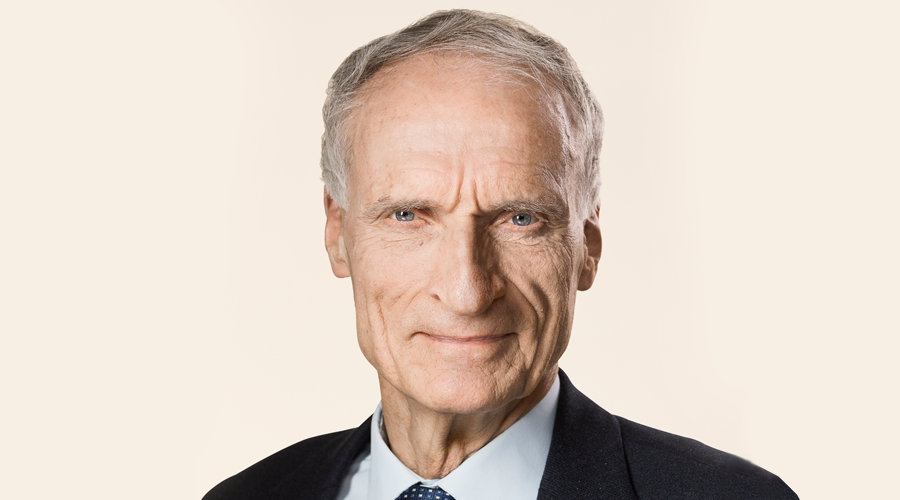
07 Oct Interview with Bertel Haarder, President, Nordic Council
Bertel Haarder, President, Nordic Council, calls on the nations in the region to put further emphasis on solving common problems together and different strategies the region is taking to further growth in digitization and sustainability.
How can Nordic nations continue to be an example for the international community?
Nordic countries have an opportunity and obligation to light the way for the rest of the world in the many areas in which we are advanced and where we can offer long-term and sustainable solutions. We must also cooperate when it comes to the environment and climate change. We are reorganizing our budget in favor of green solutions and want to remain the leading region in the world in this regard. However, it is important that other countries realize that the region has learned to be non-aggressive, and that wealth comes not necessarily from natural resources but intelligence. Education and research are the key to everything. For example, Denmark had a particularly difficult history but was led by the philosopher Grundtvig who created the foundation for the enlightenment movement and created the ambition for farmers to learn and be part of the thought revolution.
How has the COVID-19 pandemic affected relations between Nordic nations?
The COVID-19 crisis tested Nordic cooperation, and Nordic countries failed. Our nations have established many irrational barriers. Those left in certain countries during the pandemic could not return home or were cut off from their jobs and did not receive compensation for some time. We were set up as a council to remove border barriers between the countries involved. We need to confront the mindsets of those involved. The next session of the Nordic Council will be dedicated to this topic; it will be tough. However, our aim is to address the issue and not look back. We want to talk about how we can avoid conflicts like this in the future. Many government players are also extremely critical of how their respective states handled the situation. This may lead to a revival of Nordic cooperation. In the past, ministers were not prepared for ministerial meetings and things were often left to civil servants. Governments should push the reset button and renew their enthusiasm for Nordic cooperation under a new path.
However, dialogue between Nordic countries remains lively. When I spoke with a deputy chairman of the Serbian parliament in Belgrade, she mentioned that Balkan countries are hypnotized by their differences and that they cannot move their attention elsewhere. On the other hand, she mentioned how Nordic nations are aware of all the opportunities and similarities that tie them together and the need for cooperation.
What is the council doing to bolster military security in the region?
The Nordic Defense Cooperation will expand in the coming years and become more visible. There is a window of opportunity for more Nordic cooperation when it comes to security. If you look at the map, you can see the importance of the Arctic and North Atlantic areas and the gap between Greenland, Iceland and the U.K. This is where Nordic countries are present. We are not aggressive and in no way can be aggressive. We are not seen as a threat in Moscow; we are seen as countries that want stability. However, we are not as small as we like to think. We have the biggest merchant fleet in the world and our gross national product is the same as Russia’s. That said, we are divided and are only 28 million people. The United States’ new isolationism —extremely visible in Afghanistan — means we must be prepared to take care of ourselves, and we can do that without being seen as aggressive. We decided that Denmark should spend more money on defense of the Arctic and would like to see more involvement from other Nordic countries in this regard.
How is each Nordic country approaching the transition to renewables in the region’s energy mix?
We share a goal to become the most integrated and sustainable region in the world. However, this does not mean we have the same priorities. In Iceland, they are concentrating on the use of hot springs and volcanoes. Norway is one of the world’s largest producers of oil and is the world’s frontrunner on carbon capture and storage. Denmark is a country of windmills, with prominent wind energy expert Vestas leading the world in this category. Their produced electricity is exported all over the world. Denmark is building a huge energy island in the North Sea. The cost of the island is five and a half times the cost of the bridge crossing the Great Belt in Denmark, one of the world’s biggest bridges. The island will be a wind-to-hydrogen base that could provide power to ships and airplanes as a compensation for oil and other fossil fuels. Sweden, like Norway, has hydropower. Finland is a very technologically advanced country that is concentrating on developing solutions for all previously mentioned renewable energy forms.
What specific digital initiatives is the Nordic Council involved in?
Everything is now related to information technology and artificial intelligence. We are trying to use our countries as an experiment lab for cooperation in information technology. We have an initiative called Nordic-Baltic ID that aims to have a common electronic identification in all the Nordic and Baltic countries. Estonia, for example, is very advanced and wants very much to be a part of everything we do. Baltic countries will play a larger and larger role in our initiatives. A common electronic identification will solve a lot of border barriers. Today, if you move from one Nordic country to another, you will encounter all sorts of problems. If we had a common form of identification, most of these problems would disappear. For instance, if I go to Sweden, I cannot use my mobile to pay. If I go to Greenland, I must still pay for roaming on my cell phone. The new system will have a positive effect on our countries, including our health system.
Nordic countries are a fantastic playground for medical researchers, and this new identification platform will help. Any company that wants to try out a new medicine or wants to trace those who are suffering from illnesses are interested in Nordic countries as we are the best in the world at registering medical history. The Faroe Islands and Iceland are at the top of the category in this regard, and doctors and patients in all countries are enthusiastic to have Nordic cooperation in this area. Nordics want to be vaccinated, are in favor of modern technology and are enthusiastic to enter medical trials as they understand their importance in health science research.
Sorry, the comment form is closed at this time.